Norma
A woman who told the story of her town.
Norma Edith Bedoya, known to everyone as Norma de Vargas, was born on 19 January 1955 in the city of Formosa. She spent much of her life recording and sharing the reality of Riacho He Hé.
Journalist, correspondent, photographer and newspaper distributor. Bringing the news to the town was part of the same craft.
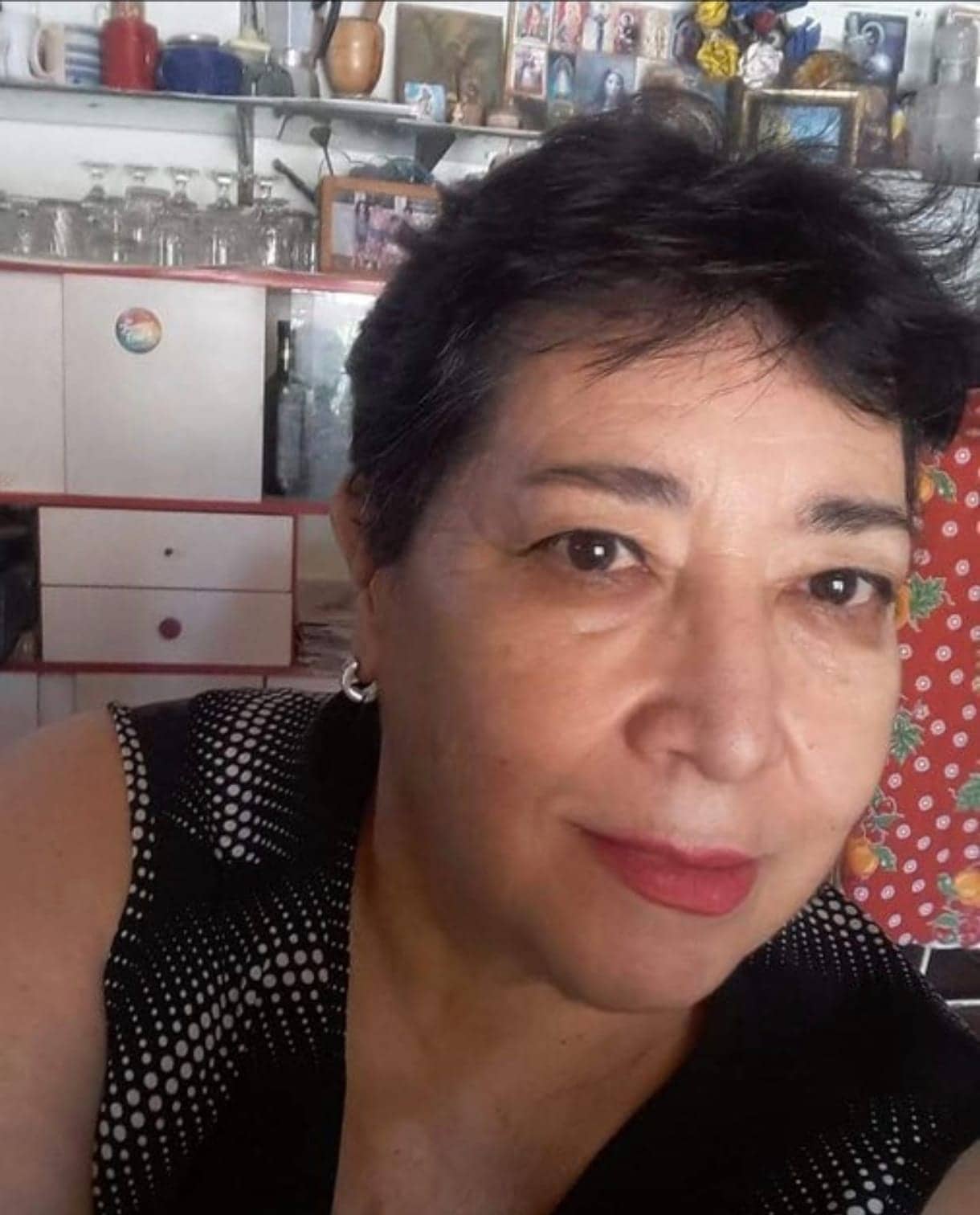
Pioneer of communication
Her work as a journalist, correspondent and photographer meant that the facts, the voices and the people of Riacho He Hé remained on the pages of the press and in the town's memory.
Delivering newspapers and magazines was the other half of that task: bringing information to where people live. In her youth she lived for thirteen years in Buenos Aires and trained in photography. Julio César Duarte, director of the magazine Protagonistas, gave her her first camera.
The news that told a town
For years she was a correspondent for Diario La Mañana. Public works, institutions, anniversaries and everyday life in Riacho He Hé found a place in a provincial newspaper.
On 24 June 2007 the paper published a special for the town's 98th anniversary. Those pages are part of the archive of how the town saw itself.
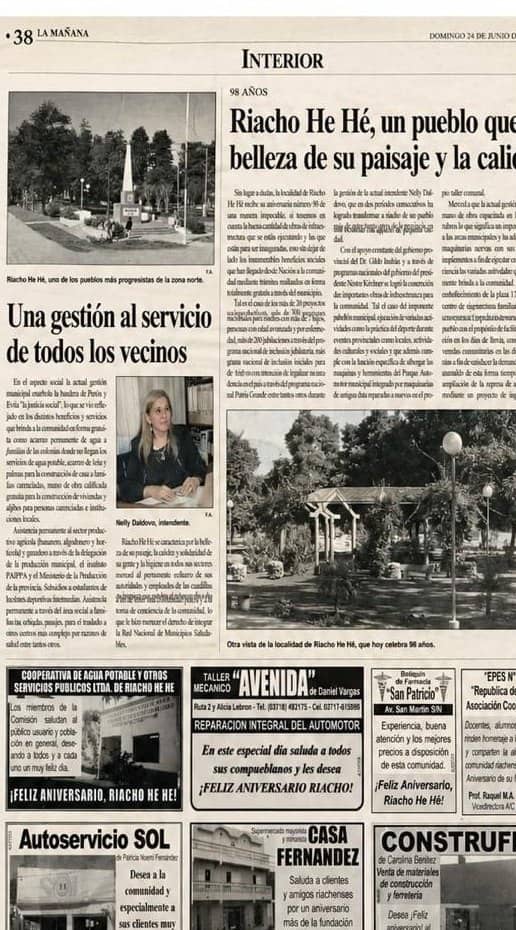
Behind every story there was a life.
She walked streets, institutions, schools and rural settlements. Camera and notebook were the tools of a craft with no timetable: when something had to be covered, she had to be there.


The photograph that made history
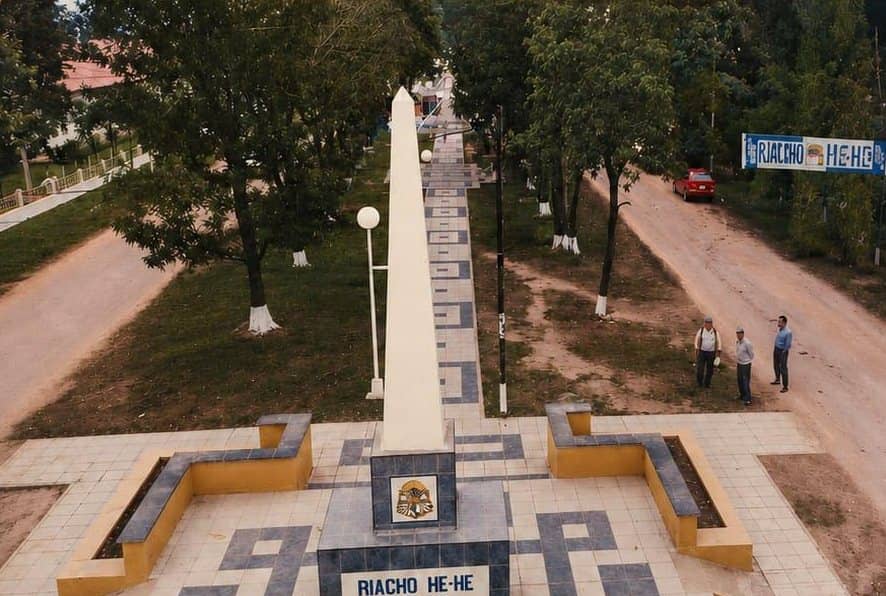
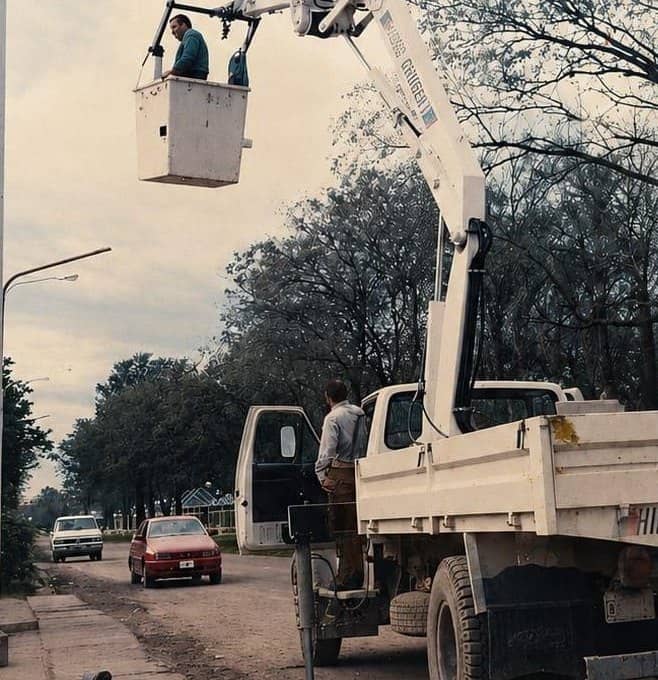
When the Obelisk of Riacho He Hé was inaugurated, Norma wanted an image that would show the scale of the work. Her husband, Daniel Vargas, went up in the municipal lift to take the aerial shot.
That photograph is part of the town's visual archive. Behind it was the work the two of them shared.
She did not only tell the community. She also built it.
She sat on the Founding Committee of the Public Library of Riacho He Hé, today the Don Félix Atilio Cabrera Popular Public Library. On the plaque placed on 24 June 1996 she appears as Norma Bedoya de Vargas, deputy treasurer.
She had earlier been part of the first Committee of the Mothers' League. In the book her words remain: “It is not to give myself credit; it only speaks of a just time when everything still had to be done and I was one part of that building.”
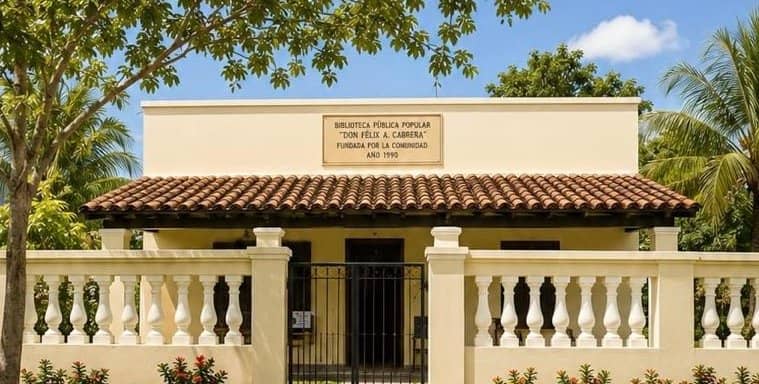
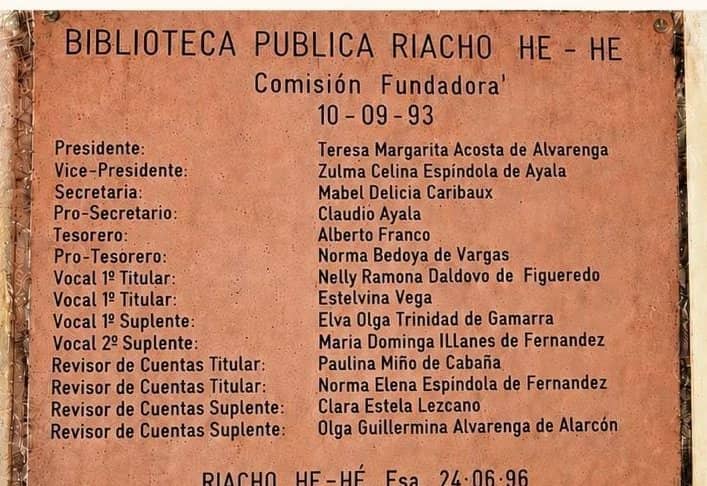
Her town recognised her too.
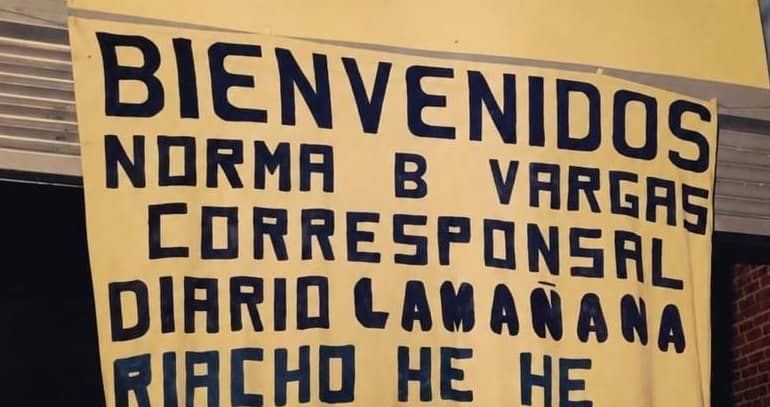
Neighbours made her a welcome banner as correspondent for Diario La Mañana. It remains as an archive piece: recognition from a town, not a corporate award.
The woman behind the journalist
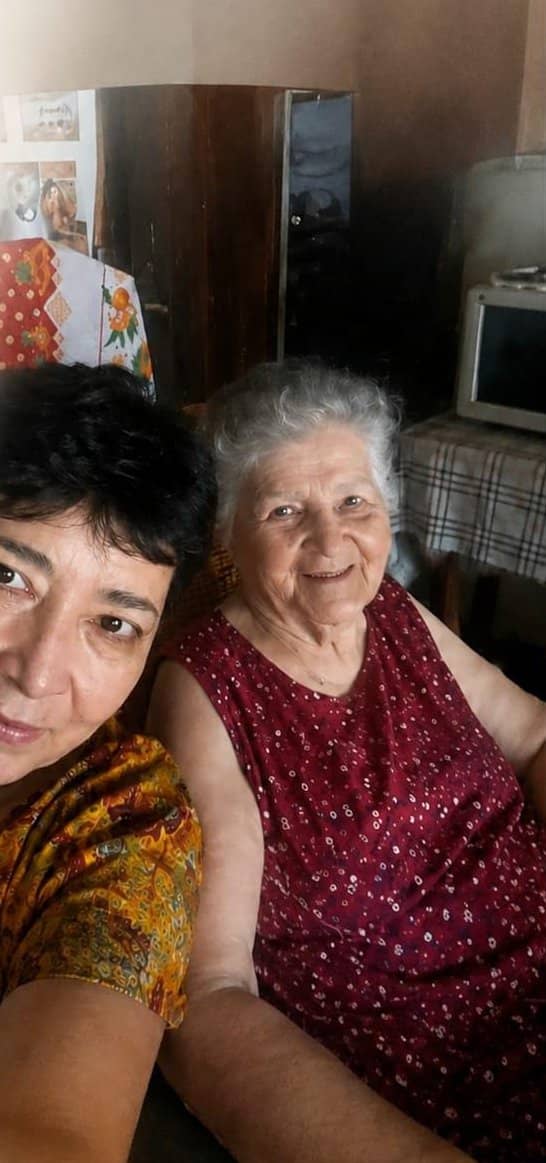
Behind every assignment there was a daughter, a mother, a companion. She was the daughter of Francisco Antonio Bedoya and Luisa Caballero.
Those who knew her well remember the generosity and the everyday commitment, not only the craft.
Family, her greatest treasure
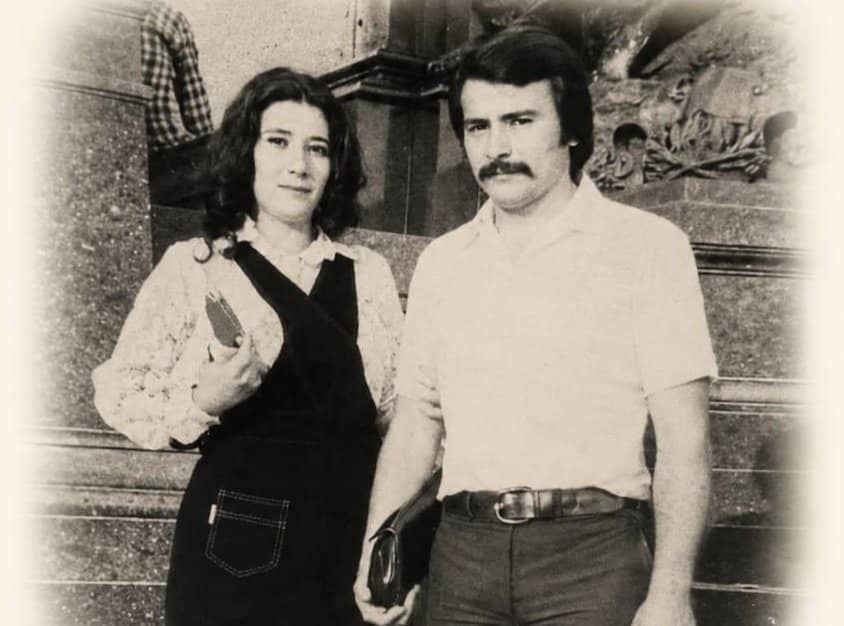
She came to Riacho He Hé with her husband, Daniel Vargas. They had two sons, Miguel and Luis, and six grandchildren.
After every story, every assignment and every working day, she came back to that place.
The photographs on this page come from the family archive and from the 2026 commemorative work.
Voices that remember her
«Norma was a woman ahead of her time. Her commitment to communication and to the growth of Riacho He-Hé left an indelible mark on our community.»
Celina EspíndolaFormer national deputy
«To speak of Norma Bedoya is to speak of the first steps of local journalism and of a woman who made communication a true life's work.»
Cristian Alejandro CabreraLocal historian and researcher
«She taught me that to communicate was not only to speak. It was to listen. It was to observe. It was to understand the other person.»
Miguel VargasEldest son
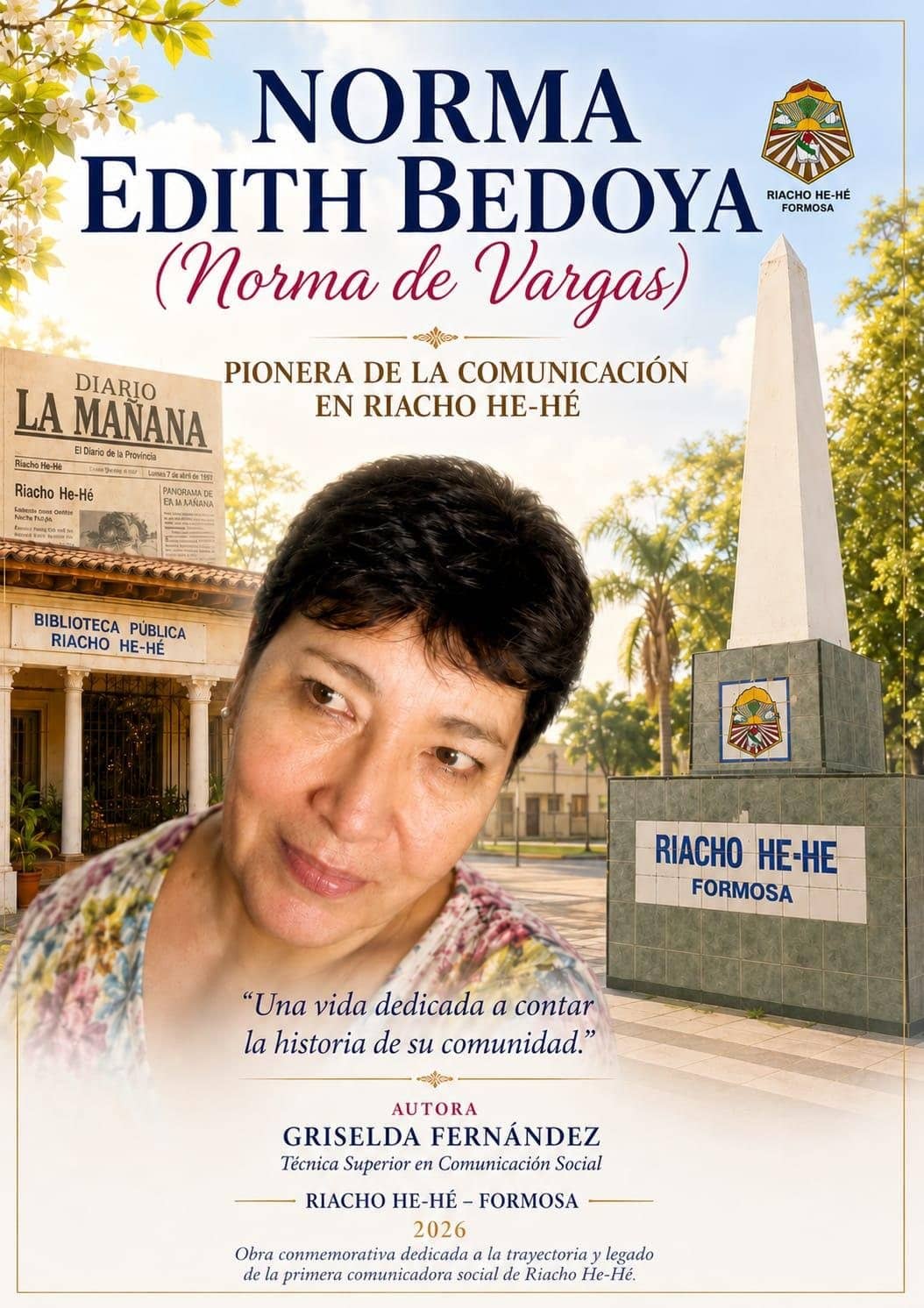
The book
Norma Edith Bedoya (Norma de Vargas)
Pioneer of communication in Riacho He-Hé
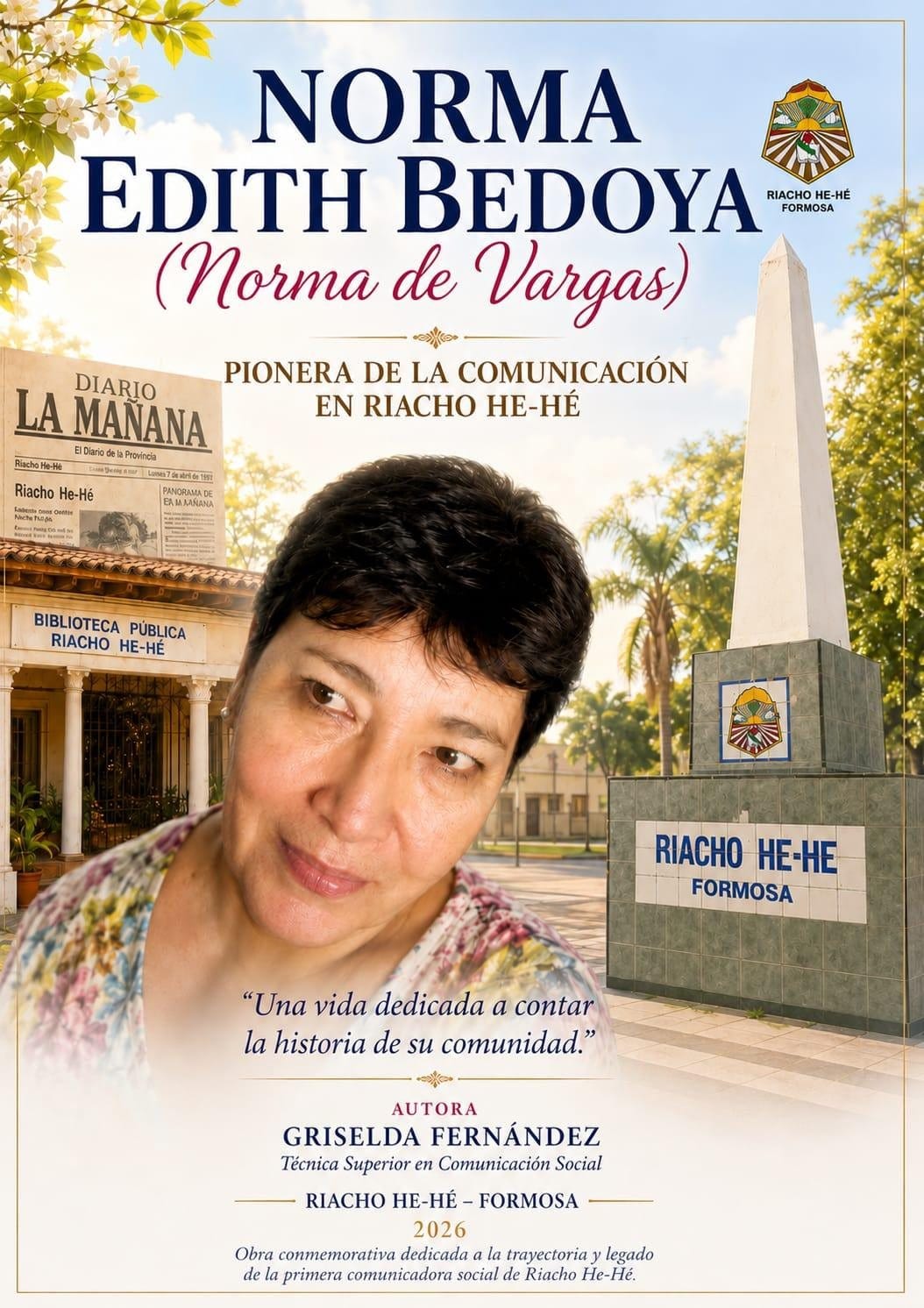
A commemorative work from 2026. It gathers testimonies, documents and photographs of her path.
Griselda Fernández, 2026
More than a house
Telling the story of a community is also a way of building it. That is what Norma did all her life.
The intention of this project is that that legacy can inspire new opportunities for other people from Riacho He Hé. First, rebuild a house. There is not yet a constituted organisation, and no published programme.
The legacy
What comes next
If you knew her and want something of that to appear in her story, the family will listen. There is no published address for that yet; when there is, it will be here and on the privacy page.
 WhatsApp
 Facebook
 LinkedIn
 X
X